
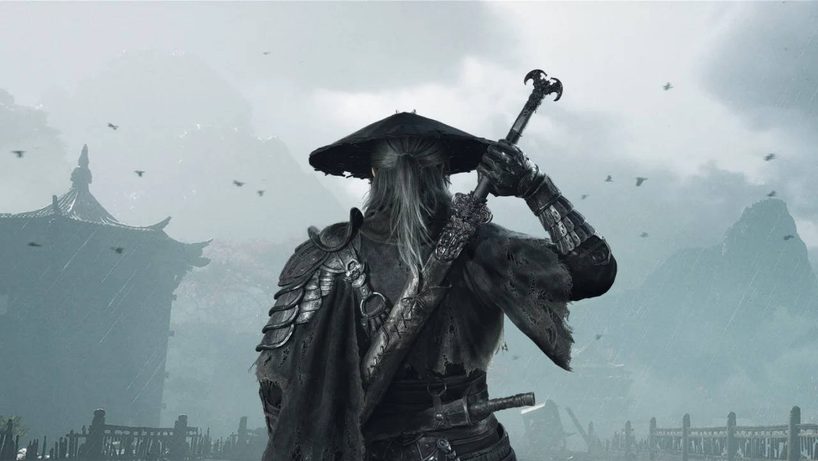
Phantom Blade Zero is shaping up to be one of the most ambitious attempts ever made to translate the language of Chinese martial arts into an interactive medium. Rather than simply using kung fu as a visual theme, S-Game has built the combat system around the philosophy and movement of traditional Chinese martial arts. Attacks, counters, dodges and defensive maneuvers flow into one another with remarkable speed, creating fights that feel less like conventional video-game exchanges and more like carefully choreographed wuxia battles. The developers have worked with martial arts practitioners and captured movements at full intensity, aiming to preserve the weight, rhythm and fluidity of authentic techniques instead of artificially speeding up animations afterwards.
A Wuxia World That Finally Feels Interactive
What makes Phantom Blade Zero particularly fascinating is the way it approaches wuxia as more than an aesthetic. The game places the player inside a dark Wulin world filled with martial arts masters, assassins, rival factions, ancient traditions and larger-than-life confrontations. Its distinctive “Kungfupunk” identity combines classical Chinese martial arts with steampunk, cyberpunk, dark fantasy and occult influences, creating a world that feels rooted in wuxia while still being unmistakably original. The result is an experience that seems designed to reproduce the sensation of watching an extraordinary Chinese martial arts film—but with the crucial difference that the player controls the swordsman at the center of the action.
Combat Designed Like a Martial Arts Choreography
The real magic lies in how the combat system turns choreography into gameplay. Phantom Blade Zero does not treat every weapon as a simple variation of the same moveset: its weapons are designed around their individual characteristics, with different animations and mechanics intended to express their cultural identity and physical properties. Swordplay is presented as a continuous clash between offense and defense, reflecting the Chinese martial arts idea that attacking and defending can happen simultaneously. Even encounters against multiple opponents are designed around coordinated enemy behavior, evoking the controlled chaos of classic wuxia cinema rather than the anonymous crowds found in many action games.
Donnie Yen: The Perfect Authority
Few names could give this project greater credibility than Donnie Yen. The legendary martial artist and actor—whose career includes Ip Man, Crouching Tiger, Hidden Dragon: Sword of Destiny and John Wick: Chapter 4—has been involved with Phantom Blade Zero as a creative consultant, helping shape its kung fu and action design. His contribution goes far beyond a celebrity cameo: Yen also performs the facial and motion capture for Mó Yuan, one of the game’s most formidable martial artists. His experience as both a practitioner and one of modern cinema’s most respected action performers makes him an exceptionally appropriate figure to oversee the translation of wuxia choreography into a playable form.
The Closest Thing to Playing a Wuxia Movie
Ultimately, Phantom Blade Zero seems to understand something fundamental about wuxia: its appeal is not simply about people wielding swords, but about movement, philosophy, elegance and impossible feats presented with complete conviction. Every acrobatic dodge, sudden counter and lightning-fast blade exchange is intended to make the player feel like part of that cinematic language. With its painstaking martial arts animation, distinctive Wulin setting and the direct involvement of Donnie Yen, the game has the potential to establish a new standard for martial arts action games. If S-Game succeeds in delivering what its demonstrations promise, Phantom Blade Zero may not merely be a game inspired by wuxia—it could be one of the rare games that genuinely makes playing wuxia feel authentic.