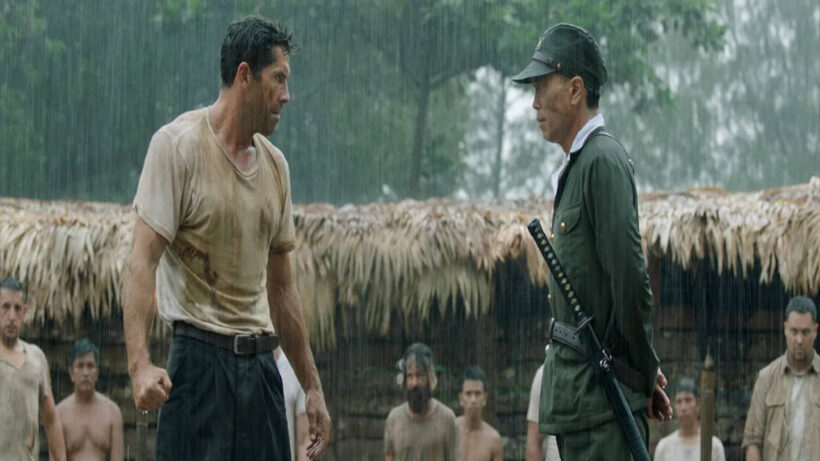
Prisoner of war is the best martial art movie of 2025. Adkins’s movie blends WWII drama with bone-crunching martial arts, using combat not just as spectacle but as a language of survival. The film’s grounded choreography and harsh one-on-one battles give the actors space to express character through movement, endurance, and discipline, turning the POW camp setting into an arena where identity and willpower are constantly tested.
Precision, Power, and Emotional Weight
Scott Adkins anchors the film with a performance that merges technical sharpness and raw grit. His strikes are clean, compact, and purposeful, reflecting years of cross-discipline training, but what stands out most is how controlled his aggression feels. Even in the most brutal exchanges, his movement tells a story of a man who refuses to break. The choreography highlights timing, footwork, and explosive transitions, allowing Adkins to deliver some of his most intense and dramatically layered screen fighting in years.
Discipline vs. Raw Instinct
Peter Shinkoda brings a cold, disciplined stillness to his role, and that discipline carries into his fighting style, which is measured, economical, and precise. His presence creates a psychological threat as much as a physical one. Donald “Cowboy” Cerrone, meanwhile, injects rugged authenticity into the film. His background in real-world combat gives his scenes a rough, instinctive energy that contrasts well with Adkins’ polish and Shinkoda’s control. Together, they create a spectrum of fighting philosophies, trained precision, stoic discipline, and survival-driven brawling.
A Showcase of Martial Identity
What makes Prisoner of War memorable is how each performer’s martial identity shapes their character. Adkins is the strategist-warrior, Shinkoda the composed tactician, Cerrone the scrapper forged by hardship. Their screen combat feels less like choreography and more like storytelling in motion, that physical authenticity is what elevates the film beyond standard war-movie action.